About Us:
Michael van Eeden Born in Africa
Virtual Tours & Safaris Adventure Travel Specialist In Africa
About Us-Virtual Tours & Safaris-From the shores of Lake Kariba – where my grandfather ran Bumi Hills Hotel and a small family of elephants were my closest childhood neighbor’s – to twenty-plus years of overlanding Central and Southern Africa in my Land Rover Defender, living rough and moving slow. That is the life that brought me here. No office. No desk. Just Africa, the bush, the open sea, and a camera.
This is my story.
Virtual Tours & Safaris
Virtual Tours & Safaris is a specialist safari booking and travel advisory service based in St Lucia, KwaZulu-Natal – the gateway to two of South Africa’s most extraordinary wildlife destinations, iSimangaliso Wetland Park and Hluhluwe-iMfolozi Park.
We book safari accommodation for the full range of KwaZulu-Natal’s Big 5 parks and private game reserves – from Ezemvelo KZN Wildlife’s own camps deep inside Hluhluwe-iMfolozi, to boutique private lodges on the park’s boundaries, to the estuary lodges and bush camps of iSimangaliso.
We also book beach hotels, B&Bs, and luxury lodges throughout the St Lucia and greater KZN region, and curate complete itineraries combining bush and coast in a single trip.
Beyond accommodation, we design and operate custom private exclusive safaris – off-the-beaten-track experiences for travellers who want something beyond the standard itinerary.
That includes eco travel, traditional Dhow sailing and beach camping along the Swahili Coast.
Walking safaris, photographic expeditions, and immersive wilderness experiences built around the landscapes and wildlife we know from decades of personal travel.
Virtual Tours is growing – and growing fast. Having recently parted ways with Heritage Tours and Safaris to chart our own course, we are expanding our advisory scope northward,
along the East African coast, covering destinations up the Swahili Coast as far as Zanzibar – Mozambique’s island chains, the Bazaruto Archipelago,
Tanzania, and beyond. Our roots are in KZN, but our reach is the full sweep of East and Southern Africa’s wild coast.
What makes Virtual Tours & Safaris different is simple:
every recommendation, every lodge, every safari route we suggest comes from a lifetime of personal experience in the field.
This is not a booking engine. It is the distilled knowledge of a person who has lived,
worked, sailed, and driven across this part of the world for more than four decades – and who knows it from the inside out.
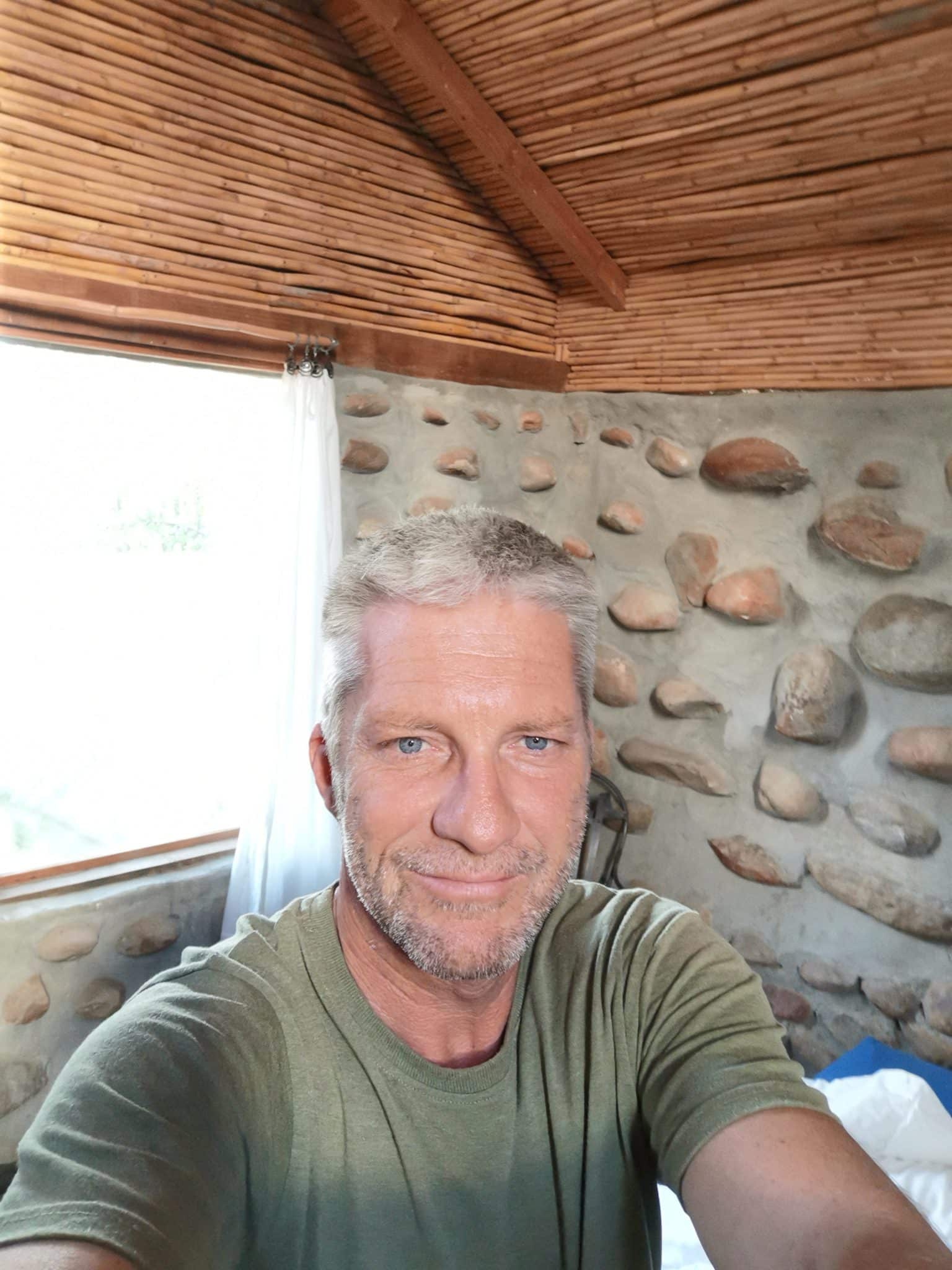
Michael van Eeden – safari expert, wildlife photographer, St Lucia, KwaZulu-Natal
A Life Lived in Wild Places
I was born in Africa. Not visiting, not relocating – born here, into a life that moved through its wildest and most remote corners from the very beginning. Everything on this site comes from that life, and from everything it has made me.
Lake Kariba – Where It All Began
My grandfather started and ran Bumi Hills Hotel on the shores of Lake Kariba in Zimbabwe – one of the most spectacular settings in Africa, where the Zambezi River was dammed to create a vast inland sea fringed by the ghostly trunks of the old flooded forest.
This was the landscape of my earliest childhood. A small family of elephants moved freely through the hotel grounds and became, in the way that only childhood can allow, my first wildlife companions.
Camp monkeys raided the Bumi Hills bar almost every night. The only transport in or out was a Land Rover on a corrugated dirt track, or a DC-10 dropping down onto a remote airstrip carved out of the bush.
My father Dr John (Papa John) had a small hospital operating from within the staff section at the back of the hotel itself, treating patients from the surrounding communities.
I grew up in that place – a child between the wild and the human world, equally at home in both.That early immersion in the African bush – the sounds, the smells,the daily presence of wild animals, the rhythm of a landscape that operated entirely on its own terms –
laid down a foundation that no amount of adult travel could replicate.Wild Africa was not something I discovered. It was simply where I came from.
A Father Who Built Hospitals in the Bush
My father was a bush doctor and surgeon who spent his career doing something extraordinary and almost entirely unrecognised: building clinics and hospitals from scratch in places that had no medical infrastructure at all. Jungle clearings in West Africa.
Remote islands in the Caribbean. Places where the nearest functioning hospital was days away and where the communities he served had been without any medical care for generations.
I travelled with him from a very young age, and as I grew older I worked alongside him in those bush hospitals. We spent extended time in West Africa – Sierra Leone and the Congo – and the experience of working in those environments left a mark that has never faded. I learned surgical basics and tropical wound care in conditions that a city-trained medical professional would find almost unrecognizable: equatorial heat and humidity, wounds infected with organisms that resist standard treatment, patients who had walked for two days to reach us.
You learn quickly in those circumstances. You learn what it means to stay calm under pressure, to work with whatever you have, and to take seriously the responsibility of being in a place where you are genuinely the only person who can help.
Living and working across West Africa with my father also gave me a knowledge of the African interior that goes far beyond the tourist map.
This was not the Africa of game lodges and guided safaris – it was the Africa of red dirt roads, small markets, river crossings, and communities living in close daily contact with the bush.
That experience broadened the photographic and natural history knowledge I was building from Kariba into a much wider, more complex understanding of what the African continent actually is.
Closer to home, my father’s work also took us through the heart of South Africa itself – not the tourist corridors, but the deep interior. The Karoo in those days, where the silence is so complete you can hear your own heartbeat and the fossil beds push through the surface of the veld,
And the back roads into the Kruger region , long before the park’s current infrastructure, when game sightings were genuinely earned.
The KwaZulu-Natal bush – the thornveld, the fever tree floodplains, the dense riverine corridors that hide leopard and nyala in plain sight. And the mountains: the Drakensburg range and its back hills, crossing the high passes into Lesotho on roads that challenge any 4×4, then dropping back down through the foothills and the midland grasslands toward the coast.
I have driven the back roads from the Drakensberg through Lesotho and down into the Eastern Cape – through Hogsback, the Wild Coast interior, and the War Trails country – more times than I can count.
This is not travel from a brochure. It is the accumulated knowledge of a person who spent their formative years moving through South Africa’s landscapes at road level, through seasons, in all conditions, with no fixed itinerary.
The Caribbean – Islands, Ocean, and the First Sails
My father’s work took us to the Caribbean too – many islands, the Bahamas, small communities on coastlines that the tourist world had not yet reached. The Caribbean gave me the ocean. As a teenager I was already sailing between anchorages, reading weather and tide, learning what it meant to be genuinely self-sufficient on the water.
The skills of offshore seamanship – navigating in uncertain conditions, diagnosing problems without outside help, staying calm when things go wrong far from assistance – are the same skills that keep you out of trouble on a remote African bush track. The ocean was my second wilderness school, and it ran in parallel with the bush from my teenage years forward.
After Boarding School – Cooking the World
After finishing school in Africa, I needed a way to keep moving and keep exploring – and cooking gave me exactly that.
Chefs ran in the family, the instinct for good timing in the kitchen came naturally, and a professional kitchen is one of the few workplaces that genuinely opens doors on every continent. I worked in top restaurants around the world, moving between postings, accumulating stamps in a passport that was already well-used.
Between kitchen stints there was always the bush, always the ocean, always another road that needed following. Cooking was never the destination – it was the mechanism that funded a life of continuous exploration, and it added another dimension of worldliness and cultural understanding that sits quietly behind everything I do.
40 Years Behind a Camera
Photography has been part of my life since I was seventeen years old. I started on classical film – learning to expose properly with no ability to check the result until the roll came back from the darkroom, working through formats, developing my own images, building a discipline around light and timing and patience that has never left me.
More than forty years later I am still shooting, now digitally, but with the systematic rigor that film imposes permanently on anyone who started that way.
Africa has always been my primary photographic subject.
But I did do a stint in fashion for few years, loved the art, did not like the industry, so got out., went into industrial commercial photography for shipping company’s like Ned-Lloyd shipping and others in Cape Town.
The wildlife, the landscapes, the extraordinary quality of light across different ecosystems and seasons – there is nowhere on earth that offers the same combination of accessibility and wildness and light, the same density of extraordinary subjects within reach of a camera.
But the photographic work has taken me far beyond the game reserves: into the jungle edges of Central Africa, along Caribbean coastlines, across the Swahili Coast, and through the agricultural and community landscapes of southern Africa that most wildlife photographers never stop to look at.
That breadth of photographic experience – from big game to birds to people to landscape – is what allows me to give genuinely useful photography advice to anyone planning a safari.
“”I have never had a nine-to-five job. My entire working life has been lived in the bush, on the road, at sea, or in a professional kitchen between expeditions. That is not a boast. It is simply the only life I have ever known, and it is the life that makes every word on this site worth trusting.””
Over Twenty Years Overlanding – Central, Southern and Rural South Africa
At a certain point the expeditions stopped being occasional and became continuous.
For over twenty years I overlanded through Central and Southern Africa, living in and around my Land Rover Defender – a purpose-built off-grid 4×4 expedition vehicle,
I designed and built myself, moving through the continent at the pace it deserves – slowly, deliberately, and without an itinerary that forced the next destination before the current one had given up everything it had to offer.
The trucks were purpose-built for extended self-sufficient travel: solar power systems, water storage for dry-country stretches, proper sleeping platforms, camera equipment mounted and powered, mechanical redundancy built in at every level. I designed and constructed them myself, which means I also understood every system when something failed in a remote location – and something always fails eventually in remote locations.
The builds evolved over the years, each one incorporating lessons learned from the one before: what works in the sand of Botswana’s Kgalagadi does not necessarily work on the corrugated laterite of Mozambique’s interior, and what carries you across a flooded Zambian river crossing,
requires very different preparation from what gets you over a boulder-strewn track in Zimbabwe’s Matobos.
The ground covered across those years was enormous. KwaZulu-Natal’s backcountry.
Mozambique from the south to the Tanzanian border. Zimbabwe, Zambia, Botswana, Namibia. Central Africa through routes that required genuine expedition planning.
The Serengeti ecosystem in Tanzania. And back again, looping through landscapes in different seasons to understand how they changed. Every significant overland route in southern and central Africa is now territory I know from ground level – not from a map, not from a guide,
but from having camped on it, broken down on it, photographed it at dawn, and eaten dust on it for hours before finding the turn I was looking for.
The Ocean – Caribbean and the Swahili Coast
Alongside the overland years, the ocean has always been there. What started as teenage sailing in the Caribbean grew into serious offshore passage-making – crossing the Atlantic, navigating the full arc of the Lesser Antilles and the Leeward Islands, working the Bahamas bank, and eventually bringing those sailing skills back to the African coast along the Swahili Coast of East Africa.
Mozambique’s island chains, the Bazaruto Archipelago, the dhow routes up toward Tanzania – some of the most beautiful and least-visited water in the world, and water that I know from passages made and anchorages held through changing weather.
Sailing and overlanding teach the same lesson from different directions: the world is enormous,
genuinely wild places still exist, and the only way to know them is to go slowly and stay long enough for them to reveal themselves. That principle is at the heart of every safari recommendation I make.
16 Years in KwaZulu-Natal – Big 5 Specialist, St Lucia
For the last sixteen years I have been based in St Lucia, KwaZulu-Natal , working as a safari and accommodation specialist covering the full range of KZN’s Big 5 parks and private reserves. St Lucia is the gateway to iSimangaliso Wetland Park – South Africa’s first UNESCO
World Heritage Site, where the estuary starts at the edge of town and hippos cross the streets at night. Hluhluwe-iMfolozi Park – Africa’s oldest proclaimed game reserve,
the park that saved the white rhino from extinction – is 45 minutes away.
The concentration of extraordinary wildlife experience within an hour of where I live and work is, quite simply, unmatched anywhere in Africa.
My specialist focus within that geography is Ezemvelo KZN Wildlife – the provincial body that manages all state-owned game reserves in KwaZulu-Natal including Hluhluwe-iMfolozi, iSimangaliso, Mkhuze, Ndumo, and Tembe – and the network of private lodges surrounding those reserves.
Sixteen years of active booking work across Ezemvelo’s camps and the private lodge sector has built a level of operational knowledge that goes far beyond what any website shows. I know which specific units at Hilltop Camp face the valley.
I know which waterhole at Mpila the lions use overnight in dry season and which camp puts you within walking distance of it. I know which private lodge on Hluhluwe’s boundary has silent traversing rights into sections of the park that Ezemvelo’s own clients cannot reach.
That is the kind of detail that only comes from being here for sixteen years – and it is the difference, for anyone planning a safari, between a good trip and an unforgettable one.
The advisory scope extends north along the coast as well. The Swahili Coast – Mozambique, Tanzania, Zanzibar, Kenya – is territory I know from years of sailing and overland travel, and I can advise on the full corridor from St Lucia to the Kenyan border.
But this site focuses on KwaZulu-Natal because that is where my knowledge is deepest, most current, and most specific.
It is where I live. It is where I work. And it is, without any serious competition, one of the most extraordinary wildlife destinations on the planet.
Credentials at a Glance
Michael van Eeden — Credentials at a Glance
Born & Raised in Africa Raised on Lake Kariba, Zimbabwe – Bumi Hills Hotel. Based in KZN for 20 years. 40+ Years Photography Classical film from age 17 through digital – wildlife, landscape & expedition. 20+ Years Overlanding Africa Purpose-built Land Rover Defender off-grid 4×4 – Central & Southern Africa. 16 Years KZN Safari Specialist Big 5 safaris & accommodation – St Lucia base, Hluhluwe & iSimangaliso. 16 Years Ezemvelo Booking Agent KZN Wildlife camps & private Big 5 lodges – specialist insider knowledge. 20 Years Liveaboard Sailing Caribbean passages, Bahamas, Swahili Coast – Mozambique to Zanzibar. West Africa Field Experience Sierra Leone & Congo — bush hospitals alongside his father in the field. 10 Years Travelling Chef Worked for top award-winning chefs across the world – the original way to travel and live in wild places. © 2026 Virtual Tours — All rights reserved. Unauthorised reproduction prohibited.Frequently Asked Questions
Who is Michael van Eeden and why is he qualified to advise on safaris?
Michael van Eeden was born in Africa and raised on the shores of Lake Kariba, Zimbabwe, where his grandfather ran Bumi Hills Hotel. His father was a bush surgeon who built hospitals across remote Africa, the Caribbean, and rural South Africa. Michael worked alongside his father in bush hospitals across West Africa, travelled the Karoo, Kruger regions, KZN bushveld, Drakensberg, Lesotho, and the Eastern Cape back roads from a young age, sailed the Caribbean and Swahili Coast, overlanded Central and Southern Africa for over 20 years in a purpose-built Land Rover Defender expedition vehicle, has been a wildlife photographer for over 40 years, and has been a Big 5 safari and accommodation specialist based in St Lucia, KwaZulu-Natal for 16 years.
What is Virtual Tours?
Virtual Tours is a safari advisory and virtual tour service based in St Lucia, KwaZulu-Natal. It covers Hluhluwe-iMfolozi Park, iSimangaliso Wetland Park, and all KZN Big 5 reserves. Founded by Michael van Eeden, who has 16 years of specialist booking experience with Ezemvelo KZN Wildlife and private lodges across the region.
Where is Virtual Tours based?
50 McKenzie Street, Shop 1, St Lucia, KwaZulu-Natal, South Africa, 3936. St Lucia is the gateway to iSimangaliso Wetland Park (UNESCO World Heritage Site) and approximately 45 minutes from Hluhluwe-iMfolozi Park.
What is Hluhluwe-iMfolozi Park and why is it famous?
Hluhluwe-iMfolozi is the oldest proclaimed game reserve in Africa, located in northern KwaZulu-Natal. It is world-famous for saving the white rhino from extinction through one of conservation history’s most successful program’s. The park is home to all Big 5 – lion, leopard, elephant, black and white rhino, and buffalo – and is widely regarded as the finest Big 5 reserve in KwaZulu-Natal. It lies 45 minutes from St Lucia and is managed by Ezemvelo KZN Wildlife.
What is iSimangaliso Wetland Park?
iSimangaliso Wetland Park is South Africa’s first UNESCO World Heritage Site, covering over 280,000 hectares of the KwaZulu-Natal coast. It includes Lake St Lucia – the largest estuary in Africa – coastal forest, coral reefs, and ocean. Home to hippos, crocodiles, elephants, rhinos, leopards, whale sharks, humpback whales, nesting sea turtles, and over 530 bird species. Virtual Tours is based at the park’s southern entrance in St Lucia town.
Is St Lucia KwaZulu-Natal a good base for a safari?
Yes – one of the very best in South Africa. iSimangaliso Wetland Park begins at the edge of town. Hippos cross the streets at night. Hluhluwe-iMfolozi is 45 minutes away. From one base you can experience Big 5 game drives, estuary boat safaris, ocean whale watching, sea turtle tours (October to March), birding, and ocean swimming – all within a single day.
For Bookings Click Here Michael van Eeden Safari Expert · Wildlife Photographer · Virtual Tours Born in Africa and raised on the shores of Lake Kariba, Zimbabwe, at his grandfather’s Bumi Hills Hotel, Michael van Eeden has spent his life in the continent’s wildest places. His father was a bush doctor who built hospitals across remote Africa, the Caribbean, and rural South Africa. Over 40 years of landscape and wildlife photography, 20-plus years of overlanding Africa in a purpose-built Land Rover Defender off-grid 4×4, and 16 years as a Big 5 safari and accommodation specialist based in St Lucia, KwaZulu-Natal. Born in Africa 40+ Yrs Photography 20+ Yrs Overlanding 16 Yrs KZN Safari Specialist Ezemvelo Booking Expert Read the full story →